- Yaro on AI and Tech Trends
- Posts
- 🤖From Frankenstein to AI Companions: The Rise of Thinking Bodies
🤖From Frankenstein to AI Companions: The Rise of Thinking Bodies
Plus: Google’s Gemini Auto Browser will change the Game

Yaro Celis
January 14, 2026
In partnership with

Get in Front of 50k Tech Leaders: Grow With Us
Will thinking bodies be a hot market this year? Maybe we share why. Google’s Auto Browser will change the game by actually doing the work for you, no clicks, just instructions. At the same time, DeepSeek is proving that efficiency, not brute force, is what truly scales. Let’s dive in. Stay curious.
Google’s Gemini Auto Browser will change the Game
🧰 AI Tools - AI Browsers
🛠️ AI Jobs Corner
From Frankenstein to AI Companions: The Rise of Thinking Bodies
Are DeepSeek’s LLMs More Efficient Than Bigger Models?
📘Learning Corner -
Subscribe today and get 60% off for a year, free access to our 1,500+ AI tools database, and a complimentary 30-minute personalized consulting session to help you supercharge your AI strategy. Act now as it expires in 3 days…
📰 AI News and Trends
TSMC Can’t Make AI Chips Fast Enough
Beijing Restricts Nvidia’s H200 Purchase, Banning the Chips From Entering China
Apple to fine-tune Gemini independently, no Google branding on Siri, more
Chinese AI developer Zhipu on Wednesday released a new open-source AI image model trained entirely with chips from Huawei Technologies
Google’s Veo now turns portrait images into vertical AI videos and upgrades Veo 3.1 with Ingredients and 4K upscaling
Other Tech News
Meta Considers Doubling Ray-Ban Glasses Production
As SpaceX Works Toward 50K Starlink Satellites, China Eyes Deploying 200K
Iran crippled Starlink, the service that became synonymous with censorship-proof connectivity. Iran has just proved that assumption wrong.
Meta is slashing hundreds of workers from Reality Labs VR division. The job cuts come as the social media giant doubles down on AI and grapples with a big bet on the metaverse that didn’t pan out
Apple To Offer “Creator Studio” Subscription Bundle With Tools For Making Films, Music & More
From Frankenstein to AI Companions The Rise of Thinking Bodies

One of the best movies of 2025 for me was Frankenstein. Guillermo del Toro took Mary Shelley’s masterpiece and gave it new life, literally. Watching it, I couldn’t help but see parallels with where AI is today and where we’re clearly heading.
In the film, Frankenstein is a fully functional being assembled from different parts, powered by a brain that learns, reasons, and improves with time and experience. The creator has his story, but Frankenstein has his own version of it, too. That part feels especially familiar.
In today’s tech landscape, LLMs are the brain. They’re evolving fast, and inference is pushing them toward reasoning capabilities that won’t mirror humans, but also won’t need to. They’re built differently. They absorb knowledge differently. And now, we’re watching robotics, the global race to attach those brains to bodies.
This isn’t a secret anymore. Soon, most human interaction with AI will be through voice, not keyboards. And when those voices live inside robots, humanoids, and digital companions with human-like forms, talking to AI will feel less like “using software” and more like, well… having a human conversation. Possibly one that never interrupts you. Or forgets what you said five minutes ago.
I recently read about how advanced the sex doll industry has become, and when you combine that with the fact that 10 million+ people use Replika daily (2023 numbers), plus millions more creatively jailbraking LLMs for companionship and sexual conversations, the direction is obvious. Human-like humanoids we can talk to, work with, rely on, and yes, have sex and form bonds with, will be a massive industry.
Frankenstein wasn’t really about monsters.
It was about creation catching up to the creator.
And this time, the monster ships with software updates.
Payroll errors cost more than you think

While many businesses are solving problems at lightspeed, their payroll systems seem to stay stuck in the past. Deel's free Payroll Toolkit shows you what's actually changing in payroll this year, which problems hit first, and how to fix them before they cost you. Because new compliance rules, AI automation, and multi-country remote teams are all colliding at once.
Check out the free Deel Payroll Toolkit today and get a step-by-step roadmap to modernize operations, reduce manual work, and build a payroll strategy that scales with confidence.
🛠️ AI Jobs Corner
Apply Today - Open Positions.
First-Line Supervisors of Productions and Operating Workers
Computer and Information Systems Managers
Are DeepSeek’s LLMs More Efficient Than Bigger Models?

DeepSeek’s Engram shows how Chinese AI labs are advancing faster by focusing on efficiency, not just scale.
Instead of forcing large language models to repeatedly recompute common phrases and facts, Engram adds a conditional memory layer that lets models look up frequent language patterns in O(1) time, like giving the model a second brain. This delivers strong gains across knowledge, reasoning, code, and long-context tasks (including a +12.8 jump in long-context retrieval) at the same parameter count and FLOPs as traditional MoE models.
More importantly, it cuts wasted computation, shifts work from power-hungry GPUs to cheap memory, and enables massive memory tables to be offloaded to the CPU with <3% overhead. The result is higher performance with lower data-center and electricity demand, highlighting a key advantage of Chinese AI teams: architectural innovation that treats compute, power, and infrastructure as scarce resources, not unlimited ones.
Google’s Gemini Auto Browser will change the Game
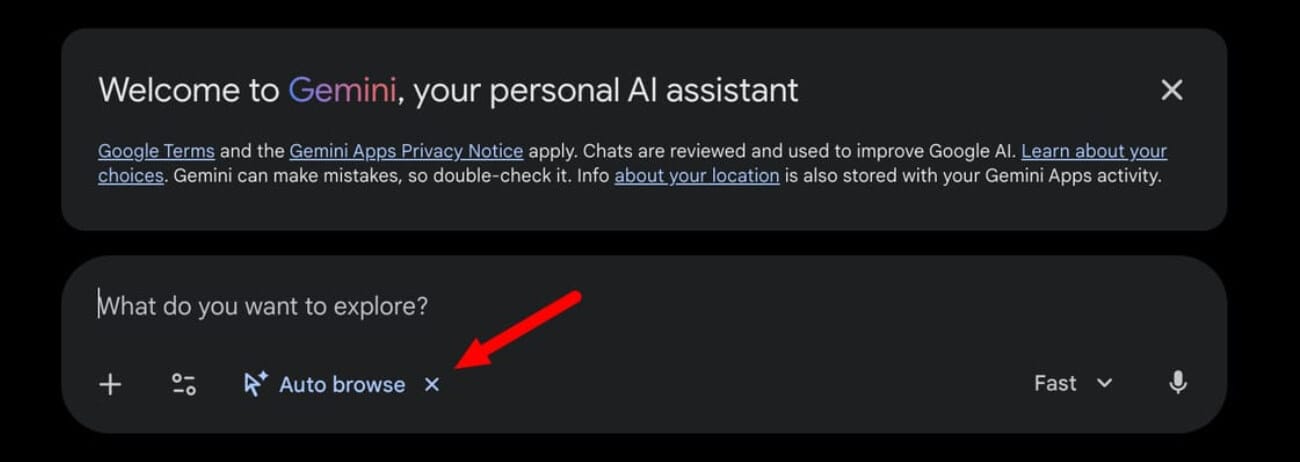
Google is testing Auto Browse for Gemini, giving the AI direct control over Google Chrome.
The feature lets Gemini autonomously open tabs, navigate pages, manage sessions, and complete multi-step browsing tasks. Early code hints suggest it may launch as a Gemini Ultra (premium) feature, likely via a Chrome sidebar or extension.
This follows agentic browsing moves from Perplexity and OpenAI, where AI agents already perform delegated web research and actions.
Will AI Browsers change the game?
1. Browsers become execution layers, not just viewers
Auto Browse turns the browser into an AI-controlled workspace, where humans describe goals and agents execute clicks, searches, and workflows. This is a fundamental shift from “search and read” to “delegate and verify.”
2. Agentic browsing becomes mainstream
Until now, autonomous browsing has been experimental or niche. Google embedding it directly into Chrome pushes agent-based web navigation to billions of users. This accelerates adoption by years, not months.
3. Search → Action → Outcome
Traditional search ends with links. Auto Browse ends with completed tasks.
Research + summarization
Comparing products
Filling forms
Managing multi-tab workflows
This threatens classic SEO-only models and favors AI-readable, structured, task-completable websites.
4. Premium AI = productivity leverage
Positioning Auto Browse under Gemini Ultra signals a new pricing logic:
Free AI = answers
Paid AI = work done
This mirrors what happened with cloud and dev tools: power users pay for automation, not information.
5. The web becomes “AI-first” with agent navigation, tool calling, structured extraction, and Deterministic actions. Human UX still matters, but machine UX becomes equally critical.
Auto Browse is not a Chrome feature; it’s a redefinition of how the internet is used.
The future browser listens, decides, acts, and reports back. Humans move from drivers to supervisors, which is the next phase of AI on the internet.
🧰 AI Tools of The Day
AI Browsers
Perplexity Comet - Navigates the web, automates research, and can manage tasks like email or organization.
ChatGPT Atlas - Helps you search, summarize, automate multi-step tasks, and act on websites.
Dia Browser - Let’s you chat with your open tabs, interpret content, and handle browsing tasks using AI.
Opera Neon - AI “Tasks” that analyze, compare, and act across multiple sources with minimal input.
Browserbase - Enables AI agents to read, write, and perform tasks on the web autonomously (good for automation services or demos).
Reply